
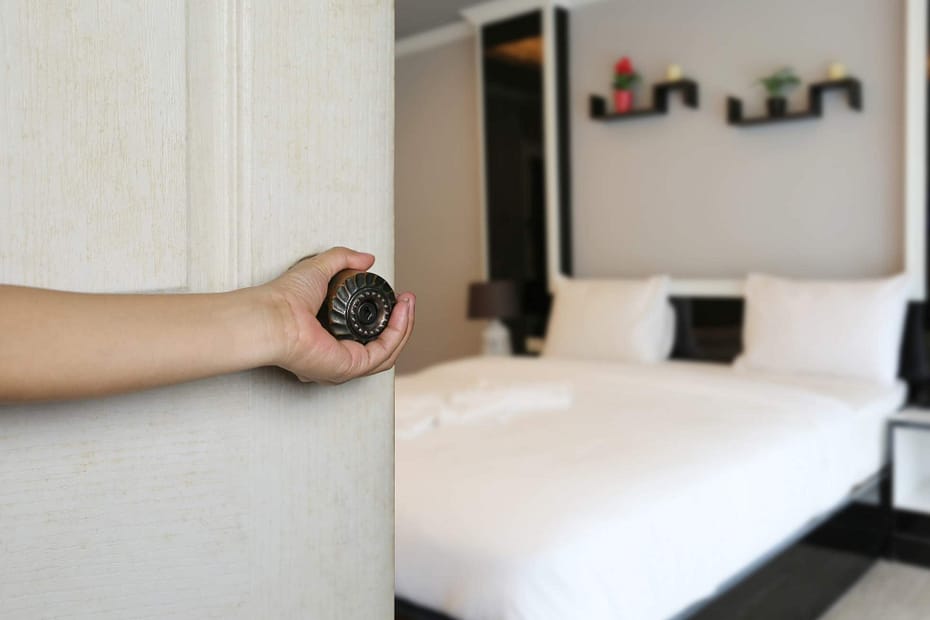
If you’re constantly hearing sounds from the outside world seeping through your bedroom door, including noise pollution, it can be incredibly disruptive. The noise from traffic, conversations, or your neighbors can be incredibly disruptive. All these sounds can prevent you from getting the quality rest you deserve. One of the most effective ways to combat this is by understanding how to soundproof a bedroom door.
In this post, we’ll walk you through practical, cost-effective solutions for soundproofing your bedroom door. If you’re aiming to reduce noise in your home office, studio, or any other space, these methods will help create a quieter environment. They are designed to block out unwanted sounds and enhance your comfort. Let’s explore these effective soundproofing measures and solutions.
Key Principles of Soundproofing a Bedroom Door
When it comes to soundproofing a bedroom door, two key principles are crucial: increasing mass and closing gaps. By understanding these principles and utilizing denser materials, you’ll be able to apply the right methods to effectively block out unwanted noise.
Increasing Mass
The more mass a door has, the better it will block sound. This is why a solid-core door is far more effective than most interior doors, including a typical hollow-core door. Solid doors absorb sound waves, preventing them from passing through and providing better noise reduction.
Closing Gaps
Sound travels through any openings, including air gaps, no matter how small. If there are gaps around your door, they become pathways for sound to enter or exit the room. Ensuring that the door frame is properly sealed with weatherstripping or door gaskets is critical to effective soundproofing.
How to Soundproof a Bedroom Door – Step-by-Step Methods
Soundproofing a bedroom door doesn’t have to be complicated. With the right approach, you can significantly reduce unwanted noise and create a quieter space. For homeowners looking for long-term solutions, replacing your door with a solid-core or sound-rated door naturally minimizes sound transfer, while the step-by-step methods below address the most common sources of sound leakage.
Step 1: Identifying the Source of Sound
Before soundproofing, identify where sound is entering by checking for gaps or cracks around the door. A simple way to locate these is to turn off the lights and shine a flashlight around the edges of the door; any areas where light leaks through are likely where sound is entering. By pinpointing the exact locations of sound leakage, you can effectively target them for soundproofing.
Step 2: Choose the Right Materials
The materials you use for soundproofing are crucial to effectiveness. Weatherstripping, acoustic panels, and mass-loaded vinyl (MLV) are all common options, while upgrading to a solid-core or sound-rated door can address the problem at its source without relying on excessive add-ons.
Step 3: Sealing the Gaps Around the Door
As mentioned, gaps are a major contributor to sound leakage, so it’s essential to seal them around the door. Perimeter seals, weather stripping, acoustic caulk, and door gaskets work well here. A properly sealed door will not only reduce sound leakage but also improve the door’s energy efficiency.
Step 4: Adding Mass to the Door
Replacing a hollow door with a solid-core door is one of the most effective methods, as it combines durability with superior sound insulation. If replacing the door isn’t an option, materials like mass-loaded vinyl (MLV) or acoustic panels can be added to increase density, though they may be less seamless than a full upgrade.
For custom door solutions, consider choosing doors that offer both performance and aesthetic appeal. For example, ProVia doors allow you to build your own custom entry door, providing noise reduction while elevating your home’s exterior appearance. ProVia doors, available through Madison Door, are known for their energy efficiency and superior build quality. This makes them an ideal choice for those looking to reduce noise and enhance curb appeal.
Step 5: Using Acoustic Expanding Foam
Acoustic foam can be useful for sealing minor cracks around a doorframe. However, for a permanent solution, replacing or professionally installing a solid-core door is more effective. This ensures a tight, long-lasting seal that doesn’t depend on temporary patchwork fixes.
Step 6: Installing a Door Sweep
To block sound coming in through the bottom of the door, a sweep is essential. Automatic sweeps or fitted bottoms are the most effective options. They provide a custom finish that seals out both noise and drafts while maintaining style.
Advanced Soundproofing Techniques for Bedroom Doors
For more effective noise reduction, advanced methods include adding acoustic inserts inside the door or using laminated glass for doors with panels. Alternatively, soundproof blankets can be used as a temporary solution to reduce noise. These options can significantly enhance sound-blocking beyond basic sealing and door sweeps.
Decorative glass doors don’t have to mean sacrificing quiet. Laminated or acoustic glazing offers noise-reducing properties for your doors. This allows you to enjoy both enhanced soundproofing and a stylish appearance in your space. For instance, you can choose ProVia glass options that incorporate noise-reducing laminated glass to keep your space serene without compromising design.
Enhancing Soundproofing with Quality Door Hardware
While selecting the right materials and sealing gaps are crucial for soundproofing, the hardware you choose plays a significant role in achieving a quiet and secure environment. High-quality door hardware ensures that your door operates smoothly and maintains its soundproofing integrity over time. Madison Door offers a variety of premium hardware options, such as durable hinges and acoustic seals, designed to enhance your door’s performance and soundproofing capabilities.
Door Hardware Options to Consider
- Heavy-Duty Hinges: Opt for robust hinges that can support the weight of solid-core doors, ensuring they swing smoothly without sagging, which could compromise the seal.
- Acoustic Door Seals: Specialized seals designed to compress tightly when the door is closed, minimizing sound leakage around the edges.
- Automatic Door Bottoms: These devices drop a seal to the floor when the door is closed, effectively blocking sound from entering through the bottom gap.
- Soundproof Door Sweeps: Attachments that fit along the bottom of the door to seal the gap, preventing noise from passing through.
- High-Quality Locks and Latches: Ensure a tight closure to maintain the integrity of your soundproofing efforts.
Common Problems and Solutions in Bedroom Door Soundproofing
Gaps around the door jamb are a major contributor to sound leakage. Precision installation, combined with weatherstripping, can help create a tighter seal and reduce noise. Hollow-core doors that don’t block sound can be replaced with solid-core or solid-wood options. This replacement provides a significant improvement in soundproofing.
Installing custom sweeps and thresholds addresses noise leakage from the bottom of the door. This ensures a snug fit, effectively blocking both sound and drafts. These solutions, along with proper door sealing, can significantly enhance the soundproofing of your bedroom door.
Cost of Soundproofing a Bedroom Door
Budget solutions like DIY weatherstripping and door sweeps typically cost between $20 and $100, offering a cost-effective way to seal gaps and reduce noise. For a mid-range solution, replacing a hollow-core door with a solid-core interior door usually costs between $150 and $500, significantly improving soundproofing.
For a higher-end option, premium solid-wood doors with professional installation offer lasting soundproofing and style. These doors start at $500 and can go up depending on the level of customization. Solid-wood doors are not only durable but also provide superior noise reduction. For the most accurate pricing, it’s important to consult a local provider like Madison Door. A professional can offer personalized quotes tailored to your needs and guide you in selecting the best solution for your home.
Conclusion
Soundproofing your bedroom door is an effective way to enhance your living space, whether you’re seeking peace or improved privacy. By combining professional installation with new solid-core doors, you can significantly reduce unwanted noise. Sealing techniques like weatherstripping and door sweeps further enhance the soundproofing. This creates a more comfortable environment. Upgrading to soundproof doors, such as sound-rated doors, not only reduces noise but also enhances energy efficiency. This improvement makes your home quieter and more energy-efficient overall.
At Madison Door, we specialize in custom-built, sound-rated doors and soundproofing materials that offer exceptional noise reduction while complementing your home’s aesthetic. We offer a variety of high-quality options, including solid-core and solid-wood doors. Our professional guidance and expert installation ensure lasting results and a seamless fit for your space. For a precise consultation and to request a quote, reach out to us today and transform your home into a quieter, more peaceful retreat.
FAQs
How do you soundproof an internal bedroom door?
To soundproof an internal bedroom door, install weatherstripping around the doorframe and use acoustic caulk to seal cracks. Replacing a hollow-core door with a solid-core door further enhances soundproofing for better results.
How to soundproof a hollow bedroom door?
To soundproof a hollow bedroom door, start by adding mass to the door with materials like mass-loaded vinyl (MLV) or acoustic panels. Next, fill gaps and seal any gaps around the door frame with weatherstripping or acoustic caulk to prevent sound from leaking through. Finally, install a door sweep at the bottom to block sound from entering through the gap between the door and the floor.
How to silence a loud door?
Use a door sweep, apply acoustic weatherstripping, and ensure no cracks are present. Installing a solid-core door will also significantly reduce sound transmission.
How to block noise from a bedroom door?
To block noise from a bedroom door, start by installing soundproof weatherstripping around the doorframe to seal any gaps. Next, add a door sweep to the bottom of the door to prevent sound from entering through the gap between the door and the floor. For the best results in blocking noise, consider replacing a hollow-core door with a solid-core option, which offers better sound insulation.