
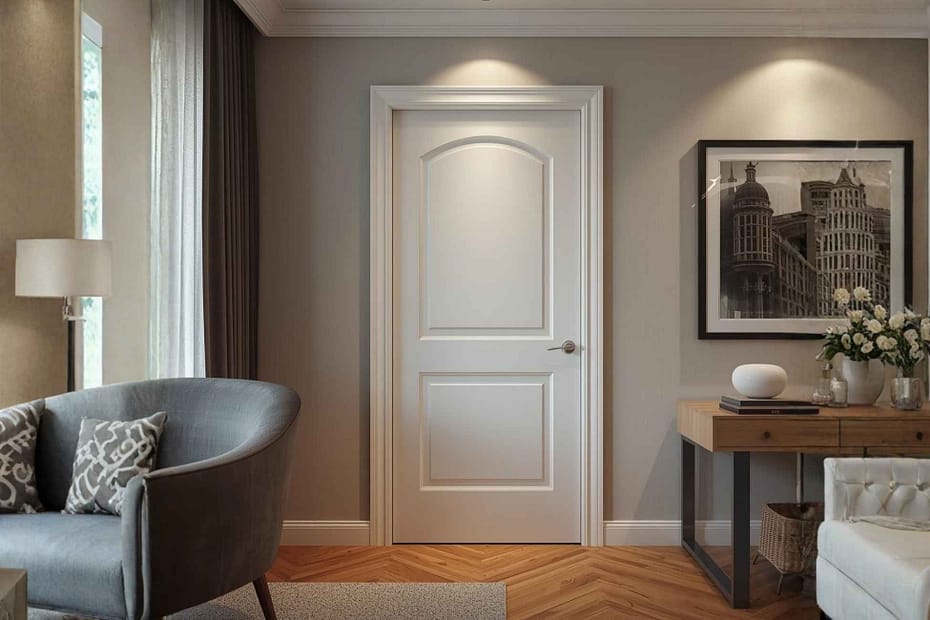
Choosing the best interior door for noise reduction can completely change how your home feels. Sound travels easily through most interior doors, especially in modern homes with open layouts. If you want to reduce noise between bedrooms, offices, or a bathroom, the right door makes a noticeable difference. While walls and insulation help, the door is often the weakest barrier in the room.
Most interior doors are lightweight and designed for appearance, not sound control. Because of that, noise pollution inside the house becomes part of everyday life. At Madison Door, we help homeowners choose interior doors with the proper core, weight, and sealing to reduce sound transmission effectively. When you understand what blocks sound waves, you can create a quieter and more comfortable space.
Why Interior Doors Matter for Sound Control
Sound travels through air gaps, lightweight materials, and thin interior walls. Most interior doors use a hollow core design that allows sound waves to pass easily from one room to another. That is why normal speech in one room often feels loud in the next space.
When you upgrade to the best interior door for noise reduction, you strengthen the weakest point in the barrier. Even strong walls lose performance if the door lacks density. Therefore, focusing on interior doors is often the fastest way to reduce noise without rebuilding framing or adding insulation.
What Makes the Best Interior Door for Noise Reduction?
The best interior door for noise reduction combines mass, a dense core, and proper sealing. Solid core doors outperform hollow core doors because they contain composite wood or engineered wood inside. That solid construction provides the weight needed to block sound waves.
Thickness also matters. A standard 1⅜-inch door performs modestly, while a 1¾-inch solid core interior door offers better performance. In most cases, upgrading to solid core interior doors provides a noticeable difference without moving to commercial soundproof doors.
Solid Core vs. Hollow Core
Hollow core and solid core doors differ significantly in how they handle sound transmission. Understanding their internal construction helps homeowners choose the best interior door for noise reduction.
Hollow Core Doors
- Use a honeycomb structure inside thin outer panels
- Made from lightweight composite material
- Designed to keep costs low
- Contain very little mass
- Allow sound transmission easily
- Reduce noise poorly in most cases
Solid Core Doors
- Use engineered wood, composite wood, or dense fiberboard inside
- Built with a solid core for added mass
- Heavier and more durable
- Block vibration more effectively
- Reduce sound transmission significantly
- Provide better privacy for bedrooms and offices
Why Weight Matters
Mass is critical in soundproofing. Heavier wood doors absorb vibration better than light hollow doors. The greater the weight, the stronger the barrier against sound transmission.
When homeowners compare doors, lifting the door often tells the story. A heavier door usually delivers better performance.
Door Types Compared for Noise Reduction
Not all interior doors perform the same when it comes to reducing sound transmission. Comparing door types helps homeowners identify the best interior door for noise reduction based on performance, budget, and room needs.
| Door Type | Noise Reduction Level | Best Use | Typical Cost |
| Hollow Core | Low | Closets or low-privacy spaces | $ |
| Solid Core | Moderate to High | Bedrooms, offices, bathroom | $$ |
| Solid Wood | High | Premium residential interiors | $$$ |
| Soundproof Interior Doors | Very High | Music rooms, studios | $$$$ |
Hollow core doors remain common because they are affordable and light. However, they offer minimal soundproofing and allow everyday noise to travel freely.
Solid core interior doors strike the best balance between cost and performance. In most cases, they provide enough mass to reduce sound transmission from normal speech or television noise. Soundproof doors offer higher performance but cost significantly more.
Understanding Sound Transmission Class Ratings
When evaluating the best interior door for noise reduction, look at sound transmission class values. Sound transmission class, often abbreviated as STC, measures how well a door blocks airborne sound. Higher STC ratings indicate better soundproofing performance.
Most hollow core doors have STC ratings around 20 to 25. At this level, normal speech remains clearly audible. Solid core doors usually reach STC ratings between 30 and 35. At this level, speech becomes muffled and less distracting.
Recommended STC by Room
Bedrooms benefit from STC ratings of at least 30. Home offices may require STC 35 for better focus. Music spaces or media rooms often require higher ratings, sometimes 40 or more. While STC ratings guide performance, sealing, and installation also affect real-world results.
Choosing the Right Door
If you want the best interior door for noise reduction, look for these features:
- Solid core construction
- Minimum 1¾-inch thickness
- Dense composite wood or engineered wood core
- Tight door frame fit
- Quality weatherstripping
- Door sweep or drop seal
- Heavy hinges for durability
This checklist helps homeowners avoid common mistakes when replacing interior doors.
Material Matters: Core Construction Explained
The core determines how effectively a door reduces sound. Hollow core doors contain a honeycomb structure that lacks density, which makes them lightweight and affordable. However, because they have minimal mass, they transmit sound easily and provide limited soundproofing between rooms.
Solid core doors use engineered wood, composite wood, or dense fiberboard to add mass and improve sound control. Some high-performance soundproof interior doors incorporate mass loaded vinyl or additional composite layers for stronger noise reduction. Real wood doors also perform well due to natural density, but engineered cores often deliver more consistent stability and durability over time.
Other Elements That Affect Sound
Doors are only one part of the sound barrier inside a house. Interior walls with minimal insulation allow sound transmission easily, especially between bedrooms and shared spaces. Carpet on the floor helps absorb noise and reduces echo within a room. However, without proper insulation in walls, sound can still travel through the structure.
Windows and exterior doors may also transmit sound from outside if they are lightweight or poorly sealed. While upgrading interior doors improves privacy, addressing insulation and sealing strengthens overall soundproofing. Adding foam strips or sealing cracks around framing can further reduce noise pollution. Even small improvements can create a quieter and more comfortable space.
Cost and Long-Term Value
Hollow core doors remain the lowest cost option. However, they provide limited noise control and minimal durability. Replacing them later often becomes necessary.
Solid core interior doors cost more initially but offer better quality and performance. In most cases, homeowners find the investment worthwhile because of improved privacy and comfort.
Soundproof doors cost more due to enhanced core features and sealing systems. However, for music spaces or sensitive rooms, the added performance may justify the expense.
Design and Style Without Sacrificing Performance
Homeowners often worry that upgrading for soundproofing limits design choices. Fortunately, solid-core interior doors come in many styles. Clean lines, panel designs, and glass accents remain available.
While glass panels can reduce acoustic performance, laminated options improve results. Choosing the right door allows you to balance aesthetics and function.
A well-designed door enhances both quiet and visual appeal. The goal is not only to reduce noise but also to complement the house.
Conclusion
Choosing the best interior door for noise reduction comes down to mass, core construction, sealing, and proper installation. Solid core interior doors consistently outperform hollow core doors because they provide the density needed to reduce sound transmission between rooms. When paired with quality weatherstripping and a properly fitted door frame, they create a stronger barrier against everyday noise. In most cases, upgrading from hollow core to solid core doors delivers a noticeable difference in privacy, comfort, and overall sound control inside the house.
At Madison Door, we help homeowners select interior doors that balance performance, durability, and style. Whether you are replacing hollow doors or upgrading to solid-core interior doors for better soundproofing, our team can guide you toward the right solution for your space. We focus on quality materials, expert installation, and designs that complement your home. Request a quote today to discuss the best interior door for noise reduction for your project.
FAQs
Can you soundproof an existing interior door without replacing it?
Yes, you can improve an existing door by adding weatherstripping, a door sweep, or a drop seal. You can also attach mass-loaded vinyl or acoustic panels to increase mass. However, replacing a hollow-core door with a solid-core door provides better long-term noise reduction.
Are solid wood doors better than solid core interior doors for noise reduction?
Solid wood doors reduce sound effectively because of their natural density. However, solid core interior doors made with engineered wood or composite material often deliver similar or better performance with greater stability. In most residential applications, both options perform well when properly sealed.
Do thicker interior doors block more sound?
Yes, thicker doors typically block more sound because they contain more mass. A 1¾-inch solid core door generally reduces sound transmission better than a thinner 1⅜-inch door. Thickness works best when combined with proper sealing and installation.
How much difference does weatherstripping make for noise control?
Weatherstripping can significantly reduce sound leakage around the door frame. Even small gaps allow sound waves to pass easily between rooms. Proper sealing often creates a noticeable difference in everyday noise levels.