
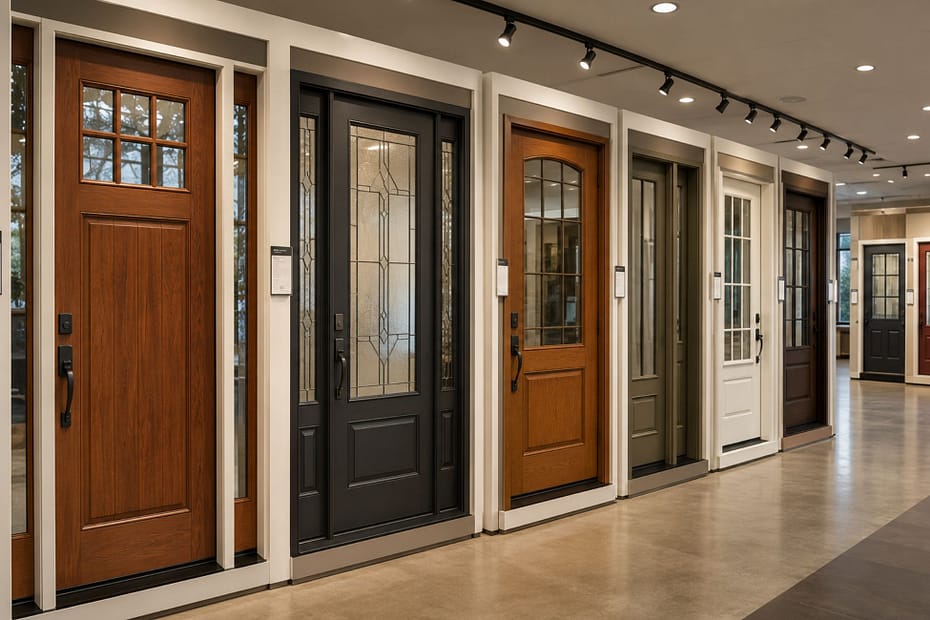
Learning how to choose a front door starts with matching the right material, style, insulation, glass, and installation method. Then, consider your home’s architecture and New Jersey weather. Based on Morris County projects, fiberglass is usually the safest long-term choice. It resists warping, needs less maintenance than wood, and handles seasonal temperature swings better than many lower-cost steel doors.
A new front door can improve curb appeal, comfort, and security, but the wrong choice can create problems quickly. In New Jersey homes, we most often see issues when homeowners choose a door based only on appearance, keep an aging frame during slab-only replacement, or overlook weatherstripping and sill performance.
This door buying guide explains how to choose a front door for your New Jersey home and avoid common mistakes that can affect appearance, comfort, and performance.
What Makes a Front Door Right for Your Home?
The right front door balances style, performance, security, and budget while complementing your home’s exterior.
One of the most common mistakes we see is choosing a door by color or glass style before checking the frame, exposure, insulation needs, and hardware. A beautiful door can still underperform if the existing frame is out of square, the sill is worn, or the glass package does not match the home’s comfort needs.
Before choosing a new door, consider these factors:
- Home’s architectural style
- Energy efficiency requirements
- Security needs
- Desired maintenance level
- Budget range
- Glass preferences
- Hardware selections
Which Front Door Material Is Best for New Jersey Weather?
Fiberglass doors are the best overall choice for most New Jersey homes because they combine durability, insulation, and low maintenance.
New Jersey entry doors have to handle freeze-thaw cycles, humid summers, wind-driven rain, and repeated seasonal expansion and contraction. In Morris County homes, especially older Colonials and Cape Cods, we often pay close attention to the sill, frame condition, and weatherstripping because those areas usually determine whether the new door feels tight and draft-free.
The most common materials include fiberglass, steel, and wood.
| Material | Pros | Cons | Best For |
| Fiberglass | Energy efficient, durable, low maintenance | Higher upfront cost | Most NJ homeowners |
| Steel | Strong security, affordable | Can dent or scratch | Budget-conscious buyers |
| Wood | Natural beauty, custom appearance | Higher maintenance | Historic and luxury homes |
Is Fiberglass or Steel Better for a Front Door in New Jersey?
Fiberglass is usually the better long-term choice for New Jersey homes because it resists dents, handles humidity and temperature changes well, and offers more design options.
Steel is better for homeowners who want a lower upfront cost, but scratches and dents should be repaired quickly to prevent wear.
Which Material Lasts Longer?
Fiberglass typically lasts longer in New Jersey’s rain, humidity, and seasonal temperature changes. It stays stable, resists common weather-related issues, and requires less upkeep over time.
Which Material Offers Better Energy Efficiency?
Fiberglass usually offers better insulation than steel, especially when it has a foam core, quality weatherstripping, and energy-efficient glass. Homeowners should compare ENERGY STAR and NFRC ratings before choosing a door.
What Matters More Than Door Material?
Many homeowners assume door material is the most important decision. In reality, installation quality often has a greater impact on long-term performance. Even a premium fiberglass door can develop drafts, water intrusion, or operational problems if the frame, threshold, sill, and weatherstripping are not installed correctly.
Which ProVia Door Is Right for Your Home?
The best ProVia door depends on your style, efficiency needs, and budget. Madison Door often recommends ProVia because its entry doors offer strong craftsmanship, customization, and long-term performance.
What Makes ProVia Signet Different?
ProVia Signet gives homeowners the look of wood with the durability of fiberglass. It is a strong choice for Chatham, Summit, and Short Hills homes that need a traditional appearance without yearly refinishing.
Recently, our team installed a ProVia Signet fiberglass entry door on a Colonial home in Chatham after the homeowners experienced sticking and seasonal swelling with their aging wood door. They wanted the appearance of wood without yearly refinishing, making Signet a practical long-term solution.
When Is ProVia Embarq the Best Choice?
ProVia Embarq is best for homeowners who want maximum energy efficiency. Its high insulation value can help reduce drafts and improve comfort during colder Morris County winters.
What Front Door Style Matches Your Home’s Architecture?
The best front door style complements your home’s architectural style and creates a balanced appearance across the entire exterior.
Many homeowners focus on color first. In reality, the overall design matters more. A front door should work with the home’s shape, windows, trim details, and even the garage door. When all exterior elements match, the property feels more inviting and visually appealing.
| Home Style | Recommended Front Door Style |
| Colonial | Raised panel fiberglass doors |
| Center-Hall Colonial | Decorative glass panels and sidelites |
| Cape Cod | Traditional six-panel entry doors |
| Ranch | Simple contemporary designs |
| Tudor | Wood-look fiberglass with decorative hardware |
| Victorian | Decorative glass inserts and detailed panels |
| Dutch Colonial | Classic symmetrical door designs |
| Mid Century Modern | Modern front doors with clean lines and glass |
What Front Door Works Best for Colonial Homes?
Colonial homes typically look best with traditional entry doors that emphasize symmetry and timeless design.
Throughout Madison, Chatham, and Morristown, Colonial and Center-Hall Colonial homes often feature paneled fiberglass doors with decorative glass inserts. Many homeowners choose woodgrain finishes that resemble solid wood while providing greater durability.
What Front Door Styles Work for Contemporary Homes?
Contemporary homes often benefit from sleek designs with minimal ornamentation.
Modern front doors usually feature clean lines, flat panels, larger glass panels, and bold hardware. Black, charcoal, and natural wood finishes remain popular choices for contemporary homes and mid-century modern architecture.
What Door Colors Are Popular in New Jersey?
The best front door color should complement the home’s siding, trim, roof tone, shutters, and surrounding masonry.
In North Jersey neighborhoods, matte black, deep navy, forest green, walnut woodgrain, and warm stained finishes tend to work well because they add contrast without looking trendy too quickly.
- Forest green
- Matte black
- Deep navy blue
- Walnut woodgrain
- Knotty Alder finishes
- Warm stained wood tones
A carefully selected paint color can help create a stronger first impression while increasing curb appeal.
What Energy-Efficiency Features Matter Most in a Front Door?
The most important energy-efficiency features include insulation, weatherstripping, glass performance, and overall door construction.
A front door affects indoor comfort more than many homeowners realize. Poor insulation can allow drafts, temperature fluctuations, and higher utility bills. New Jersey’s climate places significant demands on entry doors throughout the year.
When comparing entry doors, pay attention to these specifications:
| Feature | Why It Matters |
| R-Value | Measures insulation performance |
| U-Factor | Measures heat transfer |
| ENERGY STAR Certification | Indicates energy efficiency standards |
| NFRC Ratings | Provides verified performance data |
| Foam Core Insulation | Improves thermal resistance |
| Weatherstripping | Reduces air leakage |
Why Are R-Value and U-Factor Important?
R-value measures a door’s resistance to heat flow, while U-factor measures how much heat passes through the entire door system. Higher R-values generally indicate better insulation, while lower U-factor ratings indicate less heat loss. Together, these ratings help homeowners compare energy efficiency and choose a door that can improve comfort and reduce energy costs. According to the U.S. Department of Energy, lower U-factor values and higher R-values are key indicators of better thermal performance.
How Does Glass Affect Energy Performance?
Modern glass technology can provide natural light without sacrificing insulation.
Many homeowners hesitate to choose glass panels because they worry about heat loss. Today’s decorative glass systems often include insulated glass units that maintain strong thermal performance while enhancing appearance.
What Security Features Should a New Front Door Have?
A secure front door combines strong materials, quality hardware, and professional installation.
Many break-ins occur through weak entry points. Upgrading an aging exterior door often improves security significantly. Strong construction helps protect the home while providing peace of mind.
Important security features include:
- Multi-point locking systems
- Reinforced strike plates
- Heavy-duty hinges
- Deadbolts
- Reinforced frame construction
- Impact-resistant glass options
What Hardware Should You Choose?
Hardware plays a major role in front door security. In many replacement projects, the deadbolt, strike plate, hinges, and frame reinforcement have just as much impact on security as the door material itself.
Popular hardware manufacturers include:
- Schlage
- Emtek
Many homeowners also choose smart lock systems that integrate with modern home security technology.
Should You Choose a Front Door With Glass?
Glass can improve curb appeal and natural light while maintaining privacy and security.
Some homeowners avoid glass because they believe it creates vulnerabilities. Modern entry doors use insulated and reinforced glass systems that offer strong performance. The key is selecting the right glass style for your needs.
What Are the Benefits of Glass Inserts?
Glass inserts can brighten your entryway and improve the look of your front door. They also add curb appeal, design flexibility, and custom decorative options without adding extra windows.
What Privacy Options Are Available?
Popular privacy glass options include frosted, rain, textured, leaded, and decorative art glass. These styles let light in while helping protect privacy.
Are Sidelites and Transoms Worth Considering?
Sidelites and transoms are worth considering if you want a larger, brighter, and more welcoming entryway. They work especially well on Colonial and traditional homes.
Should You Replace Only the Door Slab or the Entire Door System?
Most homeowners benefit more from replacing the entire door system rather than only the door slab.
Many existing door problems originate in the frame, threshold, or surrounding components. Replacing only the slab may leave underlying issues unresolved. A complete system replacement often delivers better energy efficiency, operation, and long-term performance.
When Can You Replace Only the Existing Door?
A slab replacement may work if the existing frame is square, solid, and free from moisture damage. However, keeping older parts is not always the best long-term value.
When Is a Full Door System Replacement Better?
A full door system replacement is usually better when there are drafts, leaks, rot, sticking, threshold damage, or visible wear. It allows installers to fix the entire opening at once.
What Components Are Included in a Full Door System?
A full door system usually includes the door slab, frame, hinges, threshold, weatherstripping, sill components, and hardware preparation. Durable options like FrameSaver frames and PermaTech sills can help reduce future maintenance.
How Do You Know It’s Time to Replace Your Front Door?
Visible damage, drafts, and poor performance often indicate that it is time to replace your front door.
Many homeowners delay replacement because the existing door still opens and closes. However, hidden issues can affect comfort, security, and energy efficiency long before complete failure occurs.
Watch for these warning signs:
- Drafts around the frame
- Rising heating or cooling costs
- Water intrusion after rain
- Rotting wood components
- Rust or corrosion
- Difficulty opening or closing
- Visible cracks or damage
Can an Old Door Affect Energy Bills?
An aging exterior door can contribute to higher utility costs.
Worn weatherstripping, poor insulation, and air leakage allow conditioned air to escape. Over time, this forces heating and cooling systems to work harder throughout the year.
Does an Outdated Front Door Affect Curb Appeal?
A worn or outdated front door can significantly impact a home’s appearance.
The front entry area often creates a visitor’s first impression. Replacing an aging door can instantly improve curb appeal and refresh the overall look of the house.
How Do You Choose a Front Door Installer in New Jersey?
Choose a front door installer with product knowledge, proper installation experience, strong reviews, warranty support, and local expertise. Even a high-quality door can perform poorly if it is not installed correctly.
Why Does Installation Matter So Much?
Proper installation helps prevent drafts, leaks, sticking, and premature wear. It also improves insulation, weather resistance, security, and long-term door performance.
What Should Homeowners Look for in an Entry Door Company?
Look for a company that can guide you through product selection, design choices, financing options, and professional installation. Madison Door helps homeowners compare entry door systems based on style, energy efficiency, security, long-term durability, and budget.
Madison Door serves Madison, Chatham, Florham Park, Summit, Short Hills, Morristown, and nearby Morris County communities.
Key Takeaways
- Choosing the right front door starts with balancing style, performance, security, and budget.
- Fiberglass doors offer the best overall combination of durability, insulation, and low maintenance.
- Matching the front door to your home’s architectural style improves curb appeal.
- Energy-efficient features such as foam core insulation and weatherstripping help improve comfort.
- Full door system replacements often outperform slab-only replacements.
- Professional installation plays a major role in long-term performance and durability.
Ready to Choose the Right Front Door?
A new front door can improve curb appeal, increase energy efficiency, strengthen security, and enhance the overall appearance of your home. Whether you are considering fiberglass, steel, or wood-look entry doors, choosing the right product starts with understanding your home’s needs and long-term goals.
Madison Door helps homeowners throughout Madison, Chatham, Florham Park, Summit, Short Hills, Morristown, and Morris County compare ProVia entry doors and find the best solution for their home.
Request a quote today to compare fiberglass, steel, and ProVia entry door options for your New Jersey home. Madison Door can help you evaluate style, frame condition, glass choices, energy performance, and installation requirements before you commit to a replacement.
FAQs
How Long Do Fiberglass Doors Last?
A high-quality fiberglass door can last 30 to 50 years or longer with proper installation and routine maintenance.
Do Front Doors With Glass Reduce Security?
Modern glass systems can remain highly secure when combined with reinforced construction and quality locking hardware.
Can I Replace Just the Door Without Replacing the Frame?
You can replace only the door slab if the frame remains in excellent condition. However, many homeowners benefit from a complete system replacement.
What Front Door Color Is Most Popular Right Now?
Bold reds, deep inky blues, and earthy greens are currently the most popular front door colors. These shades stand out, boost curb appeal, and provide distinct aesthetic advantages depending on your home’s style.