
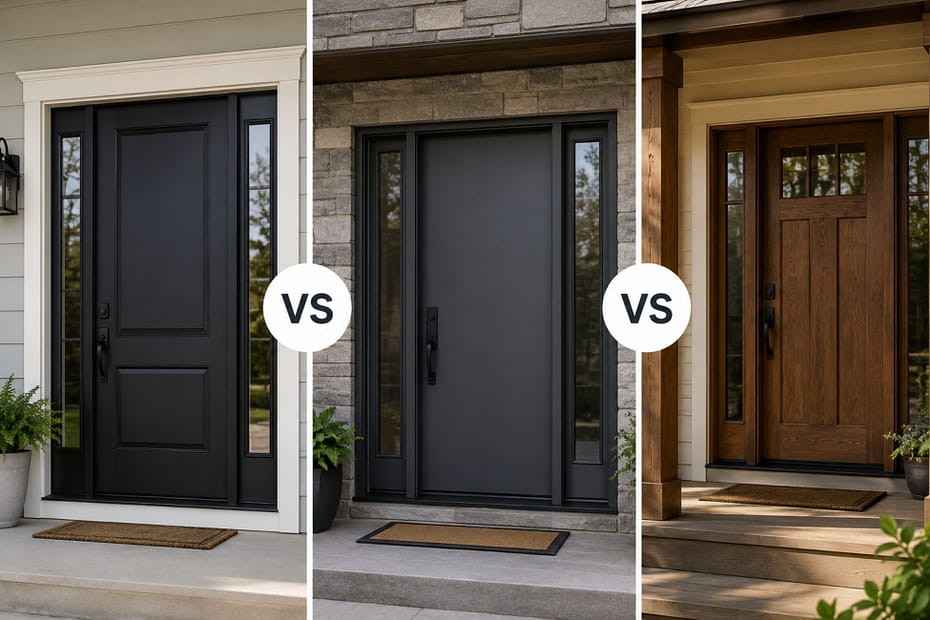
If you are comparing a fiberglass vs steel vs wood entry door for your New Jersey home, fiberglass entry doors usually provide the best mix of long-term durability, energy efficiency, curb appeal, and low maintenance. Steel doors offer strong security and lower upfront pricing, while wood doors deliver premium natural beauty but require more upkeep in NJ’s humid summers and freezing winters.
A Madison, NJ homeowner with a Center-Hall Colonial initially wanted a traditional mahogany wood door. After comparing refinishing needs, winter exposure, and energy performance, they chose a ProVia Signet fiberglass system with Inspirations Art Glass and a mahogany-style woodgrain finish. The deciding factor was keeping the traditional Colonial look while reducing long-term maintenance.
Homeowners in Madison, NJ, and surrounding towns can request a same-day quote from Madison Door by sending photos of their current front door and preferred style.
What Is the Best Material for a Front Door in New Jersey?
For most New Jersey homeowners, fiberglass entry doors offer the best combination of energy efficiency, low maintenance, curb appeal, and long-term durability.
After installing entry doors across Madison, Chatham, Summit, Florham Park, and nearby NJ towns, we usually see door problems come from three conditions: moisture at the bottom rail, direct sun fading the finish, and winter air leaks around poorly sealed frames. That is why the best front door material for New Jersey needs to handle humidity, freeze-thaw cycles, and daily temperature swings.
Many homeowners compare fiberglass doors, steel doors, and wood doors because each entry door material has different strengths. Fiberglass doors typically provide better energy efficiency and lower maintenance. Steel entry doors tend to offer strong security and value pricing. Real wood doors provide unmatched aesthetic appeal, especially for Colonial and Tudor homes throughout Morris County.
The best material for your new entry door depends on:
- Your budget
- Your home’s architecture
- Your energy efficiency goals
- Maintenance expectations
- Exposure to harsh weather
- Desired curb appeal
- Security priorities
How Do Fiberglass, Steel, and Wood Entry Doors Compare?
Fiberglass is best for all-around NJ performance, steel is best for lower upfront cost and security, and wood is best for an authentic appearance when regular maintenance is acceptable.
| Feature | Fiberglass Entry Doors | Steel Entry Doors | Wood Entry Doors |
| Typical Lifespan | 30–50 years | 20–30 years | 20–40 years |
| Typical R-Value | 5.0–6.0 | 2.0–3.0 | 1.0–2.0 |
| Energy Efficiency | Excellent insulation | Good insulation | Moderate insulation |
| Maintenance Level | Low maintenance | Moderate | High |
| Dent Resistance | High | Moderate | Moderate |
| Rust Resistance | Naturally resistant | Can rust if damaged | No rust |
| Moisture Resistance | Excellent | Good | Poor–Moderate |
| NJ Climate Performance | Excellent | Good | Moderate |
| Appearance | Wood look finishes available | Smooth surface or painted door | Real wood grain |
| Security | Strong reinforced frames | Excellent with heavy-gauge steel | Good with quality locks |
| Cost Range Installed | $5,000–$8,500 | $3,800–$5,500 | $7,000–$12,000+ |
| Best For | Most homeowners | Budget + security | Historic homes |
| Maintenance Needs | Mild soap cleaning | Paint touch-ups | Refinishing and sealing |
| Typical Home Styles | Colonial, Ranch, Split-Level | Modern, traditional | Victorian, Tudor |
| Common Door Systems | ProVia Signet | ProVia Legacy Steel | Mahogany wood door |
ENERGY STAR requires certified windows, doors, and skylights to meet U-factor and, when applicable, SHGC requirements by climate zone and glazing level. NFRC labels also help homeowners compare door energy performance using ratings such as U-factor, SHGC, visible transmittance, and air leakage. Because fiberglass entry doors often use insulated cores, polyurethane foam core construction, and better weatherstripping, they can support stronger energy performance than many basic wood or steel doors.
Which Lasts Longer, Fiberglass or Steel?
Fiberglass entry doors generally last longer than steel doors in New Jersey because they resist dents, rust, moisture, and temperature swings better.
In NJ, steel doors can perform well, but scratches or damaged paint may expose the metal underneath. Once that happens, moisture can lead to rust, especially near the bottom edge of the door. Fiberglass doors do not rust, and quality options like ProVia Signet use a polyurethane foam core, reinforced frames, and durable fiberglass skins for better long-term durability.
For most homeowners in Florham Park, Short Hills, Madison, and Chatham, fiberglass is the better long-term choice if the goal is low maintenance, better insulation, and a wood look that holds up through humid summers and freezing winters.
Proper installation still matters. Even the right door material can underperform if the frame, threshold, or weatherstripping is not installed correctly.
Are Fiberglass Doors More Energy Efficient Than Steel or Wood?
Fiberglass doors are generally the most energy-efficient entry doors because they use insulated cores and advanced door system construction to reduce heat transfer.
Fiberglass doors compare favorably against both fiberglass and steel competitors because modern fiberglass entry doors use high-density polyurethane foam core technology for excellent insulation.
| Door Material | Typical R-Value | Energy Efficiency Level |
| Fiberglass Doors | 5.0–6.0 | Excellent |
| Steel Doors | 2.0–3.0 | Good |
| Wood Doors | 1.0–2.0 | Moderate |
Many ENERGY STAR-rated fiberglass front doors include:
- Polyurethane insulating foam core
- Insulated cores
- Q-LON weatherstripping
- Multi-point lock systems
- High-performance glass package options
- ComforTech glazing
- Reinforced frames
A properly installed fiberglass entry door can help reduce utility bills and improve energy efficiency year-round.
Steel entry doors also provide energy savings when they include insulated cores, but fiberglass performs better during major temperature swings. Natural wood doors provide some insulation, but cannot match the efficiency levels of modern fiberglass doors.
NFRC explains that U-factor measures how well a window, door, or skylight keeps heat from escaping, with lower numbers showing better insulation. ProVia also states that its fiberglass entry doors are designed for energy efficiency, security, and custom front door performance, making ProVia Signet a strong fiberglass option for NJ homeowners comparing long-term comfort and durability.
Which Entry Door Requires the Least Maintenance?
Fiberglass doors are generally the lowest-maintenance entry door material because they resist moisture, dents, rust, and fading better than wood or steel.
Low maintenance is one of the main reasons many homeowners choose fiberglass entry doors for NJ homes.
Fiberglass doors tend to require only:
- Mild soap cleaning
- Occasional hardware checks
- Basic weatherstrip inspection
- Glass cleaning
- Simple seasonal maintenance
Steel doors require more upkeep because homeowners must monitor scratches and paint finishes to prevent rust. Once steel doors begin corroding around door glass inserts or lower panels, repairs can become expensive.
Wood doors require the highest maintenance burden because natural wood reacts heavily to humidity and direct sunlight. A solid wood exterior door may need periodic staining, repainting, resealing, or refinishing.
Many homeowners love the look of real wood, but they prefer fiberglass doors compared to traditional wood because modern wood look finishes and woodgrain texture technology closely mimic traditional mahogany.
The ProVia Signet line offers realistic wood look finishes that fit Colonial, Cape Cod, and Victorian homes without the constant refinishing demands of solid wood doors.
Which Entry Door Material Offers the Best Security?
Steel entry doors usually offer the strongest impact resistance, but fiberglass doors can also provide excellent home security when installed as part of a complete reinforced door system.
For most homes, security depends on more than the door slab; many front-door weaknesses happen at the frame, strike plate, hinge, or lock area, so reinforced hardware and proper installation matter as much as material choice.
Steel doors, such as the ProVia Legacy Steel series, are a strong choice for homeowners who want security and cost savings. Fiberglass front doors are also secure, especially when paired with composite frames, multi-point locks, and impact-resistant glass inserts.
For Madison, Chatham, Florham Park, and Short Hills homeowners, the best option is usually a complete door system with durable materials, professional installation, and trusted hardware from brands like Schlage or Emtek.
Are Wood Doors Still Worth It for Historic NJ Homes?
Wood doors are still worth considering for historic New Jersey homes when homeowners prioritize authentic architectural detail and natural wood craftsmanship.
Historic neighborhoods in Summit and Short Hills often feature Colonial, Tudor, Victorian, and Dutch Colonial homes where real wood entry doors remain highly desirable.
A traditional mahogany wood door provides:
- Rich natural wood appearance
- Custom carving options
- Premium curb appeal
- Historic authenticity
- Unique stain finishes
However, wood doors require significantly more maintenance in NJ weather.
Humid summers, direct sunlight, and winter moisture exposure can cause:
- Warping
- Cracking
- Swelling
- Fading
- Finish deterioration
Many homeowners now compare fiberglass and steel alternatives because fiberglass doors visually compare very closely to wood while offering better energy efficiency and long-term durability.
For example, a ProVia Signet fiberglass door with Knotty Alder woodgrain texture can closely replicate the appearance of natural wood while remaining naturally resistant to moisture and temperature swings.
How Much Does a Fiberglass vs Steel Entry Door Cost in NJ?
Steel entry doors generally cost less upfront, while fiberglass entry doors usually deliver better long-term value through durability and energy savings.
| Door Type | Typical Installed Cost |
| Steel Entry Doors | $3,800–$5,500 |
| Fiberglass Entry Doors | $5,000–$8,500 |
| Premium Wood Doors | $7,000–$12,000+ |
Door replacement pricing varies depending on:
- Glass package selection
- Decorative panels
- Door glass size
- Hardware upgrades
- Reinforced frames
- Sidelights
- Professional installation complexity
Fiberglass doors typically cost more than steel upfront, but many homeowners recover cost savings through:
- Lower utility bills
- Reduced maintenance
- Better long-term durability
- Fewer refinishing costs
- Better insulation
The 2025 Cost vs. Value Report lists steel entry door replacement with a job cost of $2,435 and resale value of $5,270, while fiberglass grand entrance replacement shows a job cost of $11,754 and resale value of $9,959. This supports the article’s point that entry door replacement can improve curb appeal and provide strong resale value.
Steel doors remain popular because they provide good value pricing and strong home security. Homeowners who choose steel often prioritize affordability while still wanting an energy-efficient exterior door.
Fiberglass performs best for homeowners focused on balancing aesthetics, energy efficiency, and long-term ownership costs.
Financing Options for Entry Door Replacement
Madison Door offers financing options for homeowners who want to upgrade their front door without paying the full project cost upfront. This can be especially helpful for larger entry door projects that include ProVia Signet fiberglass doors, ProVia Legacy steel doors, sidelights, decorative glass, or upgraded hardware.
If you are comparing fiberglass vs steel entry door options in Madison, Chatham, Florham Park, or Summit, ask Madison Door about available financing when requesting your quote.
What Is the Right Entry Door for Your Home?
The right entry door depends on your budget, home style, maintenance preferences, and energy efficiency goals.
Use these factors when comparing fiberglass, steel, or wood entry doors:
Key Takeaways
- Fiberglass entry doors typically offer the best overall performance for New Jersey homes.
- Steel doors provide strong security and value pricing for many homeowners.
- Wood doors deliver premium aesthetic appeal but require more maintenance.
- Fiberglass doors generally last longer than steel in harsh weather conditions.
- ENERGY STAR-rated door systems can improve energy efficiency and reduce utility bills.
- Proper installation matters just as much as selecting the right entry door material.
If you are comparing fiberglass vs steel entry door options for your NJ home, the Madison Door team can help you choose the right door system based on your home style, budget, and long-term performance goals.
Visit the showroom or request a quote to compare fiberglass doors, steel entry doors, and premium wood door options for your home in Madison, Chatham, Florham Park, Summit, and nearby North Jersey communities.
FAQs
Which lasts longer, fiberglass or steel entry doors?
Fiberglass entry doors generally last longer because they resist dents, rust, moisture damage, and temperature swings better than steel doors.
Are fiberglass front doors worth the extra cost?
Yes. Fiberglass front doors often provide better long-term durability, lower maintenance, improved energy efficiency, and stronger curb appeal.
Do steel doors rust in New Jersey?
Steel doors can rust if the painted surface becomes damaged and moisture reaches exposed metal.
What is the most energy-efficient front door material?
Fiberglass doors are usually the most energy efficient because insulated cores and polyurethane foam construction provide excellent insulation.
Are wood doors good for NJ weather?
Wood doors can perform well with proper maintenance, but they require more upkeep in humid summers and freezing winters.
Can fiberglass doors look like real wood?
Yes. Modern fiberglass doors use realistic woodgrain texture technology and wood look finishes that closely resemble natural wood.
What entry door adds the most home value?
High-quality fiberglass entry doors often provide the best balance of resale value, curb appeal, and energy efficiency.
How long do fiberglass entry doors last?
A professionally installed fiberglass entry door can often last 30–50 years with minimal maintenance.