
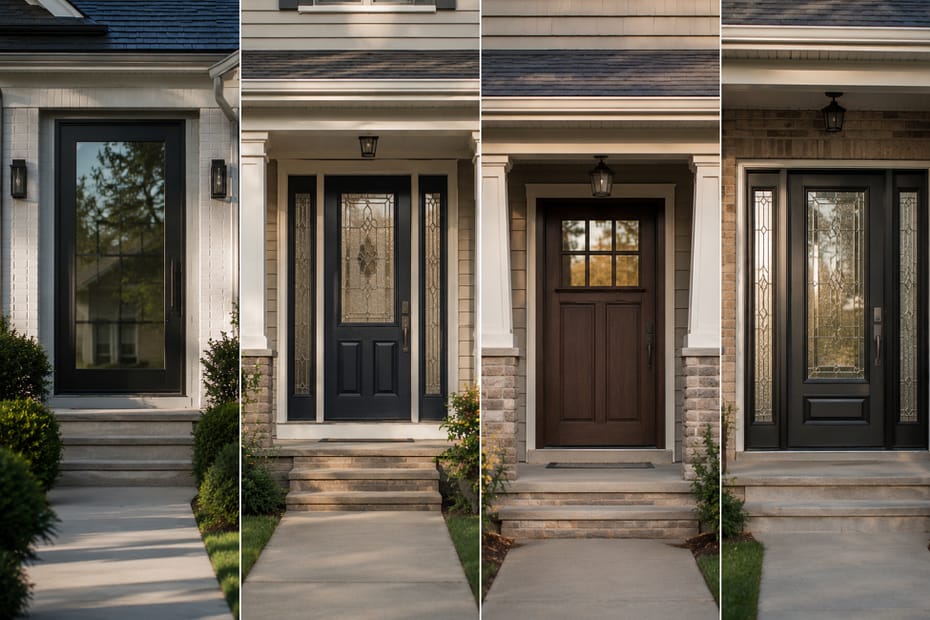
Choose ProVia patio doors with sliding operation when you need floor space and wider outdoor views. Select a hinged model when you prefer a traditional entrance.
ProVia builds sliding systems with vinyl or wood-clad vinyl. It builds hinged systems with fiberglass or steel. Your opening, style, glass package, and installation conditions should guide your final choice.
Madison Door serves Madison, Chatham, Florham Park, Summit, Morristown, and nearby communities. Before recommending a patio door, our team reviews swing clearance, frame condition, exterior exposure, glass preferences, and installation requirements.
What Types of ProVia Patio Doors Are Available?
ProVia offers sliding and hinged patio doors with several configurations, finishes, and glass options.
The sliding collection includes Aeris, Endure, Aspect, and EcoLite. These sliding doors move horizontally along a track. Most configurations contain two, three, or four panels. Available configurations may slide left, right, or from the center.
Aeris combines a vinyl exterior with a real wood-clad interior. Available woods include oak, maple, and cherry. Homeowners can also select interior stain or paint colors. Endure uses all-vinyl construction and provides many customization options. Choices include laminated woodgrains, exterior paint colors, grids, hardware finishes, and several glass packages.
Aspect uses a rigid vinyl frame and simplified options. EcoLite offers an all-white, two-panel design with fewer customization choices. ProVia hinged patio doors are built from Signet or Ascent fiberglass systems and Legacy steel systems. These units pair one operating door with fixed glass. Two-lite and three-lite configurations are available.
What Is the Difference Between Hinged and Sliding ProVia Patio Doors?
A hinged patio door swings on hinges, while a sliding glass door moves horizontally without using floor space.
A hinged model creates a traditional entrance. It can complement Colonial, Tudor, Victorian, Cape Cod, or Dutch Colonial architecture. However, the open door path needs a clear interior or exterior space.
A sliding glass patio system works well near dining tables, kitchen islands, or compact decks. Its operating panel stays within the frame. Therefore, it does not interrupt furniture placement or walking areas.
| Feature | Hinged ProVia Patio Door | Sliding ProVia Patio Door |
| Operation | Swings on hinges | Moves along a track |
| Floor clearance | Requires swing space | Requires no swing space |
| Primary materials | Fiberglass or steel | Vinyl or wood-clad vinyl |
| Appearance | Traditional or French-door style | Broad, glass-focused design |
| Screens | Sliding screen available | Sliding screen available |
| Best fit | Defined architectural entrance | Space efficiency and views |
Choose a sliding door when furniture, walkways, or deck space limit the door’s swing. Choose a hinged door when the home needs a traditional entrance. However, confirm that the open panel will not block furniture or traffic. Measure the available clearance before choosing either design.
Are ProVia Sliding Patio Doors Made From Fiberglass or Steel?
ProVia’s main sliding glass doors use vinyl-based frames, while fiberglass and steel belong mainly to hinged patio systems.
First, choose between sliding and hinged operation. Then compare materials within that category. ProVia’s main sliding patio doors use vinyl-based frames. Its hinged patio doors offer fiberglass or steel construction. Therefore, homeowners usually cannot choose fiberglass or steel for a standard ProVia sliding system.
Signet and Ascent provide fiberglass choices. Legacy provides 20-gauge steel construction. Homeowners replacing double hung windows may want matching finishes. A coordinated vinyl window and patio door package can create a consistent exterior. However, compare the exact performance ratings and opening conditions before ordering.
Is Fiberglass or Steel Better for a Hinged ProVia Patio Door?
Choose fiberglass when wood-inspired styling and finish choices matter most. Choose steel when you prefer rigid construction and painted surfaces. However, repair deep scratches before moisture reaches exposed metal.
Neither material guarantees better security. Locks, glass, framing, hardware, and installation also affect security.
| Factor | Fiberglass Hinged Door | Legacy Steel Hinged Door |
| Main strength | Styling and customization | Rigidity and strength |
| Surface | Woodgrain or smooth | Textured or smooth steel |
| Finish | Stain, glaze, or paint | Mainly painted finishes |
| Impact response | Resists visible denting | May show hard impacts |
| Moisture concern | Does not rot like wood | Finish damage needs repair |
| Best for | Wood-inspired styling | Rigid steel construction |
Which ProVia Sliding Patio Door Line Fits Different Priorities?
Aeris combines a vinyl exterior with a real wood-clad interior. Endure provides all-vinyl construction with broad customization. Aspect offers streamlined vinyl options. EcoLite provides a simpler, all-white two-panel design.
| ProVia Line | Construction | Best For | Notable Options |
| Aeris | Vinyl exterior, wood interior | Traditional interiors | Oak, maple, cherry |
| Endure | All-vinyl | Broad customization | Triple-pane glass, grids, colors |
| Aspect | All-vinyl | Streamlined choices | Internal blinds, privacy glass |
| EcoLite | All-white vinyl | Simpler projects | Privacy glass, grids |
Which ProVia Patio Door Provides the Best Outdoor View?
A ProVia sliding glass patio door usually provides the widest outdoor view because glass covers most of each panel.
Panel layout affects the final sightline. Two-panel doors usually have fewer vertical frame sections. Larger systems provide wider openings but may divide the view. Clear glass creates the least interruption. Grids and internal blinds add style or privacy but remain visible.
A hinged patio door offers a different advantage. It creates a stronger architectural focal point and can suit Colonial, Tudor, or Cape Cod homes. Fixed glass beside the operating door still brings natural light indoors.
For the best view, compare the glass area and frame layout of the exact configuration. A larger door does not always provide a clearer view if it includes more panels, grids, or wider framing.
Which ProVia Patio Door Is More Energy Efficient?
No single ProVia patio door is always the most energy efficient because performance depends on its frame, glass package, configuration, and installation.
Compare each product’s NFRC U-factor and solar heat gain coefficient. A lower U-factor indicates less heat transfer. However, pane count alone does not determine performance. Frame design, configuration, exposure, and installation also matter.
ProVia lists Low-E coatings, argon gas, and double- or triple-pane glass among available ComforTech options. Endure also uses multi-chamber profiles and insulated frame cavities to improve thermal performance.
Proper installation remains essential. Gaps around the frame can reduce comfort, regardless of the door’s published rating.
Which ProVia Patio Door Is More Secure?
Both door styles can provide effective security. However, security depends on the complete installed system. Compare the lock, strike reinforcement, glass type, panel interlocks, and frame condition. Installers must also keep the frame square. Misalignment can prevent the lock from engaging correctly.
Hinged systems include a keyed handle and a thumbturn deadbolt. Sliding models can include mortise locks, keyed handles, panel interlocks, and footlocks.
Use these criteria:
- Compare locks and strike reinforcement.
- Review the glass and panel interlocks.
- Confirm that the frame remains square.
- Test every lock after installation.
- Confirm hardware availability before ordering.
Some ProVia configurations offer Schlage or Emtek hardware. Availability varies by product and configuration.
Which Patio Door Requires Less Maintenance?
Vinyl sliding patio doors usually require less finish maintenance than hinged fiberglass or steel doors.
During service visits, our installers check tracks, rollers, and drainage openings for debris. Buildup can affect drainage, locks, rollers, and smooth operation.
Vinyl needs little finish maintenance. Fiberglass needs periodic finish checks. Repair deep scratches in steel before moisture reaches exposed metal.
Follow these maintenance steps:
- Clean tracks and drainage openings.
- Inspect screens and weatherstripping.
- Test locks, hinges, and rollers.
- Repair damaged finishes promptly.
- Request service when panels drag or leak.
What Affects the Installed Cost of a ProVia Patio Door?
The installed cost depends on the product line, size, panel count, glass, hardware, finish, and labor.
Structural repairs can also increase the final cost. For example, rot or damaged framing may require repairs before installation.
A replacement within the existing opening usually requires less work than a new or enlarged opening.
Madison Door offers financing for qualified homeowners. Review current rates, terms, and eligibility before applying.
Why Does Professional Patio Door Installation Matter?
Professional installation keeps a patio door square, sealed, secure, weather-resistant, and easy to operate.
Our installers check for uneven sills and misaligned framing because both conditions can affect operation. Sliding panels may drag, while hinged doors may rub, leak, or resist locking.
Madison Door inspects the sill and surrounding framing after removing the old door. Our installers then prepare the opening, apply flashing, insulate the perimeter, and adjust the panels and locks.
A professional installation includes:
- Measuring the opening
- Removing the old door
- Inspecting the framing
- Repairing verified damage
- Setting the frame square
- Applying flashing and insulation
- Adjusting panels and locks
Installers should check the weatherstripping compression on applicable hinged systems.
Should You Choose a Hinged or Sliding ProVia Patio Door?
Choose sliding for space efficiency and broad views, or choose hinged for traditional styling and fiberglass or steel construction.
Select Aeris for a real wood interior. Consider Endure for broader customization and Aspect for streamlined vinyl choices.
Pick Signet or Ascent for fiberglass construction. Consider Legacy when steel construction matters most.
Madison Door can help you compare each option against your home, budget, and opening. Request a free quote to begin.
Key Takeaways
- ProVia sliding patio doors use vinyl or wood-clad vinyl frames.
- ProVia hinged patio doors offer fiberglass or steel construction.
- Sliding doors save swing space and provide broad outdoor views.
- Fiberglass offers wood-inspired finishes and greater styling flexibility.
- Steel emphasizes rigid construction and painted finishes.
- NFRC ratings and installation quality affect thermal performance.
- Madison Door reviews the opening, swing clearance, exposure, and installation needs before recommending a configuration.
FAQs
Do ProVia hinged patio doors include screens?
Eligible ProVia hinged patio door configurations can include sliding screens. Screen availability may depend on the configuration, size, and selected product. Confirm the screen details before ordering.
Can ProVia patio doors include internal blinds?
Some ProVia hinged and sliding patio doors offer internal blinds. The blinds sit between sealed glass panes. This design protects them from dust and removes exposed cords. Availability varies by product and glass package.
Can ProVia build a custom-sized patio door?
Many ProVia patio door configurations support custom sizing. However, size limits depend on the product line, panel count, glass package, and operating style. Confirm every dimension before ordering.
Does triple-pane glass always provide the best value?
No. Triple-pane glass may improve thermal performance, but it also increases cost and weight. Compare the complete NFRC ratings instead of counting glass panes. Climate, exposure, frame design, and installation also affect performance.