
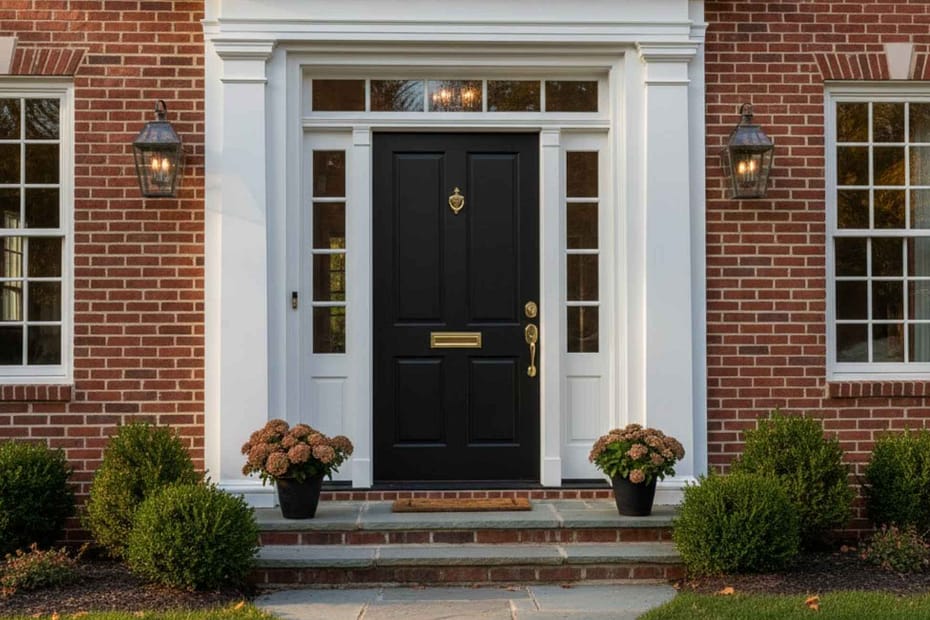
Choosing exterior doors for colonial homes is not just about replacing a door. It is about protecting the balance, symmetry, and character that define colonial architecture. Colonial-style homes are known for straightforward design, centered entryways, and carefully matched details. The wrong door can feel out of place fast, while the right one can quietly elevate the entire exterior.
This guide covers door styles, materials, glass options, and expert insights for Colonial homes. It explains how to balance traditional design with modern needs like durability, security, and energy efficiency. With guidance from Madison Door, you can make confident decisions that respect your home’s original character.
What Defines a Colonial Home Exterior
Colonial homes follow a clear architectural language that dates back centuries. Understanding these design principles is essential before selecting a front door.
At the core of colonial design is symmetry. The front door usually sits at the center of the home, with windows evenly spaced on either side. Trim work is clean and intentional, not ornate. Every exterior feature works together to create balance rather than draw attention to itself.
Key traits that influence door selection include:
- A centered entry that anchors the home’s exterior
- Rectangular forms and clean lines
- Traditional trim and molding
- Brick or wood siding with muted, classic colors
- Multi-pane windows that echo the door’s proportions
According to the National Park Service, Colonial Revival architecture emphasizes symmetry and classical proportions, which directly influences exterior door placement, size, and detailing.
Best Exterior Door Styles for Colonial Homes
Selecting the right door style is one of the most important decisions when upgrading exterior doors for colonial homes. Colonial doors are meant to look timeless, not trendy.
Paneled Colonial Front Doors
Paneled doors are the foundation of colonial design. They reflect the era’s emphasis on craftsmanship and symmetry. Six-panel doors are the most traditional choice and are often seen in older colonial homes. Four-panel doors also work well, especially on slightly wider or taller entryways. Raised panel designs add subtle depth without overpowering the façade, while flat panels offer a slightly simpler, more understated look. When choosing a paneled door, proportion matters more than decoration. Clean panel lines help maintain the home’s symmetrical design and keep the exterior cohesive.
Doors With Glass for Colonial Homes
Glass can be incorporated into colonial doors without compromising the home’s traditional style. The key is restraint. Colonial doors often use divided lite glass rather than large, open panes. This mirrors the look of colonial windows and maintains visual balance across the exterior. Clear or lightly textured glass allows light into the entry without drawing too much attention. Decorative glass works best when it follows simple patterns and avoids modern curves or heavy ornamentation. The goal is to support the door’s structure, not turn it into a focal point that competes with the rest of the house.
Single vs Double Entry Doors
Single-entry doors are the most common choice for colonial homes. They align naturally with centered entryways and help preserve symmetry. Double doors can work, but only when the scale of the home supports them. Larger colonial homes or those with wide brick façades may benefit from double doors paired with sidelights or a transom. When done correctly, this creates a grand entrance while still respecting colonial proportions. Mistakes often happen when double doors are added to homes that are not wide enough. This can throw off balance and make the entry feel forced rather than intentional.
Choosing the Right Material for Colonial Exterior Doors
Material choice affects more than appearance. It influences maintenance, longevity, insulation, and how well the door holds its colonial character over time.
Wood Doors
Wood is the most historically accurate material for colonial doors. Solid wood doors offer rich texture, depth, and warmth that are difficult to replicate.
However, wood requires regular maintenance. Exposure to moisture, sunlight, and temperature changes can cause warping or fading if the door is not properly sealed and maintained. Wood works best for homeowners who prioritize authenticity and are prepared for ongoing care.
Fiberglass Doors
Fiberglass doors have become a popular option for exterior doors for colonial homes because they balance tradition and performance. High-quality fiberglass doors can replicate wood grain closely, including oak textures and raised panel details.
The material resists moisture, requires less maintenance, and offers strong insulation. For many homeowners, it provides the colonial look they want with fewer long-term upkeep concerns.
Steel Doors
Steel doors are valued for strength and security, but they must be selected carefully for colonial homes. Smooth steel doors with traditional panel layouts can work, but overly modern finishes or flat designs can feel out of place.
It is often best used on secondary entry doors where security matters more than visual prominence, such as side or rear entrances.
Material Comparison Overview
| Material | Appearance | Maintenance | Energy Efficiency | Best Use Case |
| Wood | Most authentic | High | Moderate | Historic or high-end colonial homes |
| Fiberglass | Very realistic | Low | High | Most colonial homes |
| Steel | Simple, strong | Low | High | Secondary exterior doors |
Glass, Sidelights, and Transoms in Colonial Entry Doors
Glass, sidelights, and transoms can enhance a Colonial entry when they follow traditional proportions and restraint. Used thoughtfully, these elements add light and elegance without disrupting symmetry.
- Divided lite glass patterns are the safest option for Colonial homes because they echo traditional window grids. Common six-lite and nine-lite patterns align well with classic window placement and reinforce symmetry.
- Sidelights and transoms work best when they are proportional to the door and façade. Narrow sidelights maintain balance, while oversized sidelights can overwhelm smaller Colonial homes.
- Transom windows should follow simple rectangular shapes with clean trim lines to stay true to Colonial design.
- Privacy considerations matter, especially for street-facing front doors. Frosted or lightly textured glass allows natural light while preserving comfort and privacy.
Best Colors and Finishes for Colonial Exterior Doors
Color and finish choices strongly influence how exterior doors for Colonial homes are perceived. While Colonial palettes lean muted, they still allow room for depth, contrast, and personality when chosen carefully.
- Classic Colonial door colors: include black, deep red, navy, dark green, and charcoal. These shades add richness while staying true to the home’s era and architectural style.
- Contrast matters on brick Colonial homes: a darker or bolder door color helps the entry stand out without feeling modern.
- Paint finishes: work best when they are subtle. Satin or semi-gloss finishes highlight panel details without creating an overly polished look.
- Stained finishes: this remains a popular option, especially for wood or fiberglass doors that showcase natural grain and texture.
Hardware and Details That Complete a Colonial Entry
Door hardware often gets overlooked, yet it plays a key role in completing a colonial exterior. Traditional hardware styles include handle sets with clean lines, subtle curves, and classic finishes. Brass, oil-rubbed bronze, and matte black are common choices that complement colonial trim and paint colors. Thumb latches and understated door knockers can add personality without overwhelming the door. Hardware should always match the scale of the door panels. Oversized or ultra-modern pieces tend to clash with colonial design.
Common Mistakes to Avoid When Choosing Exterior Doors for Colonial Homes
Even small missteps can disrupt the balance of a colonial exterior. These mistakes often happen when modern trends override architectural context.
Some of the most common issues include:
- Using large, modern glass panels that break symmetry
- Choosing flat, unpaneled doors with no visual depth
- Installing oversized sidelights on narrow façades
- Selecting bright or trendy colors that clash with the brick or trim
- Ignoring how the door aligns with the window grids and trim lines
Avoiding these mistakes helps preserve the home’s original character while still allowing room for personal style.
Expert Tips for Selecting the Right Colonial Exterior Door
Professionals who work on colonial homes consistently emphasize proportion and restraint. One of the most common recommendations is to let the home guide the door, not the other way around. Experts often suggest matching door panel layouts to nearby windows and keeping glass designs simple. Fiberglass doors are frequently recommended for homeowners who want the look of wood without the maintenance. Another key insight is planning for the long term. A door that looks good today should still feel appropriate years from now. Colonial homes reward timeless choices more than bold experiments.
Conclusion
Choosing the right exterior doors for colonial homes comes down to respecting symmetry, proportion, and timeless design. Paneled styles, balanced glass options, traditional colors, and properly scaled details all work together to preserve the character that defines colonial architecture. When materials and finishes are selected with care, a new door can enhance curb appeal, improve performance, and still feel true to the home’s original era. The best results come from letting the house guide the decision rather than following short-term trends.
At Madison Door, we help homeowners choose exterior doors that complement their colonial home’s style while meeting modern standards for durability, security, and energy efficiency. Our team guides you through door styles, materials, glass options, and finishes to find the right fit for your home. Request a quote today to get expert recommendations and start your project with confidence.
FAQs
What style front door for my Dutch colonial?
A Dutch Colonial front door typically features a simple paneled design with balanced proportions. Divided lite glass or a solid raised-panel door works best to match the home’s traditional character.
Why do the front doors in American houses open into the house instead of to the outside?
Inward-opening doors protect hinges from tampering and work better with weather sealing. They also prevent doors from being blocked by snow, debris, or uneven ground.
Wouldn’t an outward-opening door offer greater protection against attempts to force entry into the house?
Not necessarily. While outward-opening doors resist kicking, exposed hinges can become a security weakness unless specially reinforced.
Why does my 1901 home have two front doors?
Many early 1900s homes had a formal front door for guests and a secondary door for daily use. This reflected social customs and helped separate public and private household activities.