
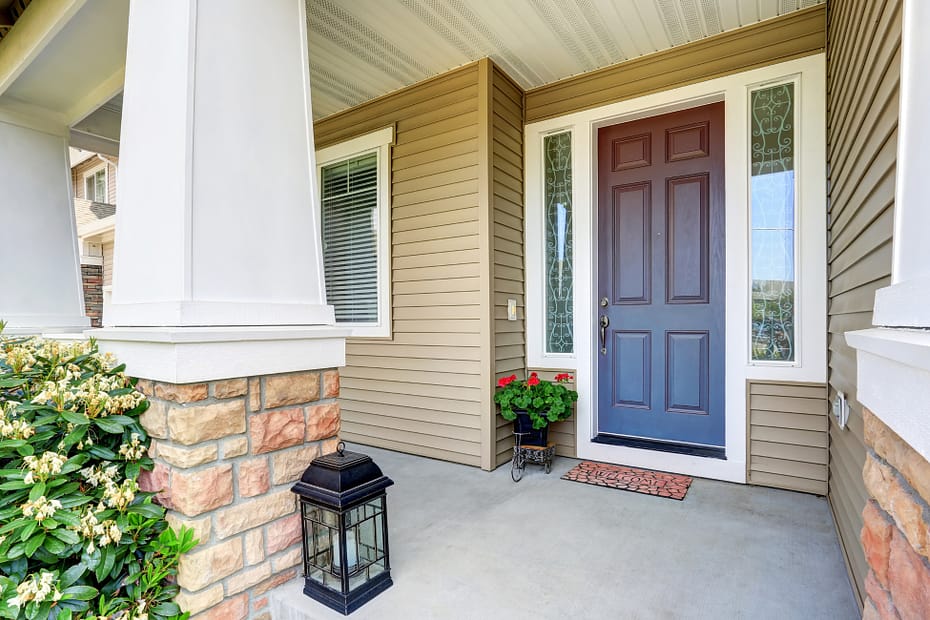
A front door sticks in summer when humidity increases moisture in a wood slab, jamb, or frame and reduces the clearance around the door. Loose hinges, paint buildup, compressed weatherstripping, threshold problems, or frame movement can cause similar rubbing, so locate the contact point before sanding or trimming.
A front door that sticks can become an annoying problem on humid days or after heavy summer rain. It may affect the latch, lock, security, or operation.
Identify the root cause before sanding, trimming, or replacing anything. The first step is finding where the slab contacts the frame. A quick fix may not prevent the same problem. Homeowners in Madison, NJ 07940; Chatham 07928; Florham Park; Summit; Short Hills; Morristown; and surrounding Morris County communities can request a free quote or text a door photo to (973) 822-1693.
Why does my front door stick when it is humid?
Your front door sticks in humid weather because wood can absorb moisture and expand as relative humidity rises.
The USDA Forest Products Laboratory explains that wood changes dimensions as it gains or loses moisture below its fiber saturation point. Swelling is greatest across the growth rings and smallest along the grain. Even slight movement can narrow the gap between the slab and frame.
This explains why a front door sticks in summer after damp weather. Rain can also affect the door jamb, trim, threshold, or frame. Failed paint or open joints may allow entry. Drier air during colder months may cause contraction. Repeated swelling can indicate an unfinished edge or leak. Learn more about why doors expand and swell.
Which door parts can swell?
The door slab, jamb, frame, and unfinished wood edges can all absorb moisture and contribute to seasonal binding. Wood doors may swell along an unfinished edge, top, or bottom. A wood door frame or door jamb can also expand.
Fiberglass and steel slabs do not swell like solid wood. However, their wood framing, hinges, weatherstripping, and thresholds can still affect operation.
Why are sticky doors common during New Jersey summers?
Sticky doors become more common during New Jersey summers because humidity and periods of heavy rain increase moisture exposure around exterior openings.
The risk is greater when an entry is uncovered, poorly sealed, shaded long enough to stay damp, or exposed to wind-driven rain. A covered door can still bind when the original slab-to-frame gap is narrow or indoor humidity remains high.
Is humidity always the reason a door is sticking?
Humidity is common, but loose hinges, frame movement, paint buildup, and weatherstripping can produce similar rubbing.
Compare the timing, location, and visible signs first. A seasonal pattern suggests moisture movement. Persistent door sticking may indicate alignment, hardware, settling, or installation concerns. Several causes can also happen together.
| Possible cause | Typical signs | Common contact area | Appropriate response |
| Moisture swelling | Worse after humid days or rain | Top or latch edge | Dry, inspect, and seal the moisture source |
| Loose hinges | Uneven gap or sagging slab | Upper latch corner | Tighten and inspect the hinges |
| Loose screws | The hinge leaf moves during use | Hinge side | Check the screws holding each hinge |
| Paint buildup | Thick, peeling, or rubbed paint | One narrow edge | Remove loose buildup after diagnosis |
| Weatherstripping | Extra force is needed to latch | Frame perimeter | Clean and inspect seal placement |
| Threshold issue | Bottom edge scrapes | Lower edge | Inspect debris and threshold alignment |
| Frame movement | Several gaps appear uneven | Multiple points | Request a professional inspection |
Weatherstripping, exterior caulk, hinges, and the threshold all affect how the complete entry system seals, drains, and operates.
How can I find where the front door is rubbing?
When a front door sticks in summer, the contact point helps separate swelling from hardware movement.
Open and close the door gently from both sides. Do not pull the handle forcefully. Watch for a slight angle, friction, or lock misalignment. Check whether the latch reaches the right place without slamming the door.
- Examine the gap across the top and on both sides.
- Look for shiny areas, scuffed paint, or compressed weatherstripping.
- Check whether the latch enters the strike plate cleanly.
- Hold the handle and gently lift the open door.
- Watch the door hinges for visible movement.
- Inspect the threshold for dirt, swelling, or rubbing.
- Repeat the test after a drier day.
What does each rubbing location mean?
Rubbing at the top latch corner often points toward loose hinges or sagging. Contact along the full latch edge can suggest swelling.
Friction at the bottom may involve the threshold, settling, or hinge movement. A latch-only problem may come from hardware alignment.
How can I tell whether the door swelled or moved out of alignment?
A reveal that changes with damp and dry weather may point to moisture movement, while a consistently uneven reveal, visible hinge movement, or sagging more strongly suggests an alignment problem. These signs can overlap, so consider the contact point and hardware condition together.
Check the reveal, or visible gap, between the slab and frame. Humidity may tighten an already narrow reveal. Loose hinge pins, worn knuckles, or screws can cause movement. Use a screwdriver without overtightening. Damaged screw holes require a repair method suited to the hinge, jamb, and framing. Avoid improvised fixes that could split the wood, weaken the hinge connection, or fail to reach solid framing.
Can I fix a sticking front door myself?
You can fix a sticking front door when minor hardware, debris, or indoor humidity causes the problem.
Start with reversible actions. Tighten backed-out screws, but stop when one spins freely. Clean the weatherstripping and threshold. Run bathroom exhaust fans. Check indoor humidity, caulk, paint, and trim.
ProVia recommends keeping entry-door weatherstripping free from dirt and grit. It also advises tightening lockset and hinge screws when necessary and lightly oiling hinges as needed. Homeowners should also inspect exterior caulk and identify any moisture entering around the opening.
When is it not a quick fix?
Call a professional when the frame looks distorted or the jamb feels soft. Water stains, rot, large cracks, and repeated lock failure need closer inspection.
The same advice applies when several doors in the house start sticking. Movement around walls, floors, or openings may require broader evaluation.
Should I sand or plane a door that sticks in summer?
Do not sand or plane a summer-sticking door before ruling out swelling, loose hinges, and frame problems.
A block plane or hand planer removes wood quickly and permanently. Winter contraction may then create an air gap. Trimming can also reduce seal contact and expose raw wood. Light sanding may help a confirmed high spot on some wood doors. However, follow the manufacturer’s instructions and reseal every exposed surface.
Before cutting, sanding, or planing a manufactured door slab, review the product-specific instructions and warranty. ProVia’s warranty does not cover damage resulting from after-sale modifications. Contact the installer or dealer before permanently altering a fiberglass or steel door.
Can indoor humidity make an exterior door stick?
High indoor humidity can contribute to swelling when interior wood surfaces absorb moisture from the room.
Hot showers, cooking, and poor ventilation can raise indoor humidity. A nearby bathroom may trap moist air. The U.S. Environmental Protection Agency recommends keeping indoor relative humidity below 60 percent. When possible, it recommends a range between 30 and 50 percent. A gauge shows what is happening. Air conditioning or a dehumidifier may reduce moisture. However, neither will fix rain entry, failed caulk, or a damaged door frame.
Can fiberglass or steel doors stick during humid weather?
Fiberglass and steel doors can stick because their frames, hinges, thresholds, and seals may still move or bind.
Fiberglass and steel do not react like solid wood. However, the entry system contains several materials. A wood jamb, loose hardware, threshold debris, or displaced weatherstripping can increase friction. Weatherstripping seals the space between the slab and frame. A properly installed threshold and sill system helps manage water at the bottom of the opening, although drainage details vary by product and installation. A harder opening does not automatically mean you need a new door.
How can I prevent my front door from sticking again?
You can reduce repeat sticking by controlling moisture, maintaining finishes, checking hardware, and stopping water around the opening.
Inspect the entry before humid weather peaks. Check paint, caulk, trim joints, seals, and sill debris. Keep water moving away from the threshold. Early maintenance can keep seasonal binding from worsening. Repeated swelling suggests unresolved moisture or fitting problems. Madison Door’s guide explains how to seal an exterior door frame.
When does a sticking door indicate water damage?
When a front door sticks in summer with stains, soft wood, or peeling paint, inspect for water entry.
Check the lower jamb and threshold without puncturing the finish. Crumbling material, dampness, dark marks, or bubbling paint can indicate damage. Ongoing water entry can lead to frame deterioration. Water can also weaken areas around hinges or lock hardware. That damage may affect alignment and security.
Could a door sticking mean the house is settling?
Door sticking can result from settling, but one sticky door does not prove a foundation problem.
Look for related signs, including new wall cracks, sloping floors, several misaligned openings, or a distorted frame. Weather may reveal existing fit problems. An installer can assess the entry system, but major movement may need another qualified building professional. Sanding can hide evidence without correcting the root cause.
When should I repair or replace a sticking front door?
When a front door sticks in summer despite basic maintenance, repair or replacement may need evaluation.
Repair suits minor hardware or alignment problems. A technician may adjust hinges, correct the strike plate, repair the jamb, or replace weatherstripping. Replacement becomes reasonable with permanent warping, rot, leakage, or damage across several parts.
| Condition | Repair may work | Replacement may be appropriate |
| Loose screws or hinges | Yes | Rarely |
| Dirty weatherstripping | Yes | No |
| Minor latch misalignment | Yes | Rarely |
| Temporary seasonal swelling | Usually | Not immediately |
| Permanent warped slab | Sometimes | Often |
| Rotted jamb or frame | Limited | Often |
| Repeated water entry | Sometimes | Often |
| The lock no longer secures properly | Sometimes | Often |
| Major air gap after trimming | Limited | Often |
What if replacement is necessary?
Homeowners can review Madison Door’s ProVia entry doors and available financing options. ProVia offers fiberglass and steel lines, including Signet, Heritage, Embarq, and Legacy Steel. The right new door depends on the opening, exposure, design, and installation needs.
What should a door professional inspect?
A professional should inspect the slab, frame, jamb, hinges, threshold, seals, latch, lock, and exterior water control.
A complete inspection should identify moisture, alignment, hardware, installation, or building movement. Accurate diagnosis prevents unnecessary trimming. This is especially important when the problem returns every summer. Homeowners in Madison and nearby towns can request a quote or text a photo to (973) 822-1693.
Key Takeaways
- A front door sticks in summer most often because moisture changes the fit of wood components.
- Loose hinges, loose screws, paint, weatherstripping, and frame alignment can cause the same symptom.
- Check the rubbing location and seasonal pattern before choosing a fix.
- Tightening hardware and controlling indoor humidity are safer than immediate sanding.
- Water damage, severe misalignment, or lock failure needs professional inspection.
- Replace the system only when repairs cannot correct permanent damage or repeated failure.
FAQs
Will a swollen door return to its normal size?
A swollen wood door may contract when moisture levels fall. Recovery depends on the material, finish, exposure, and permanent distortion. Do not assume every door will return to its previous fit.
How long does a swollen front door take to dry?
Drying time varies with moisture exposure, airflow, temperature, finish, and wood thickness. A door may improve after conditions become drier. Persistent swelling can signal ongoing water entry.
Why does my front door stick only after rain?
Rain can wet exposed edges, trim, or the door frame. Water may also enter through failed caulk or drainage problems. Inspect the opening for stains and damaged seals.
Why does the latch stop lining up in summer?
Swelling, hinge movement, or frame changes can shift the latch relative to the strike plate. Diagnose the cause before moving or filing hardware.